
Brand Applications
Designing for Space, Distance, and Movement
Process Highlight
Large Format & Experiential Design
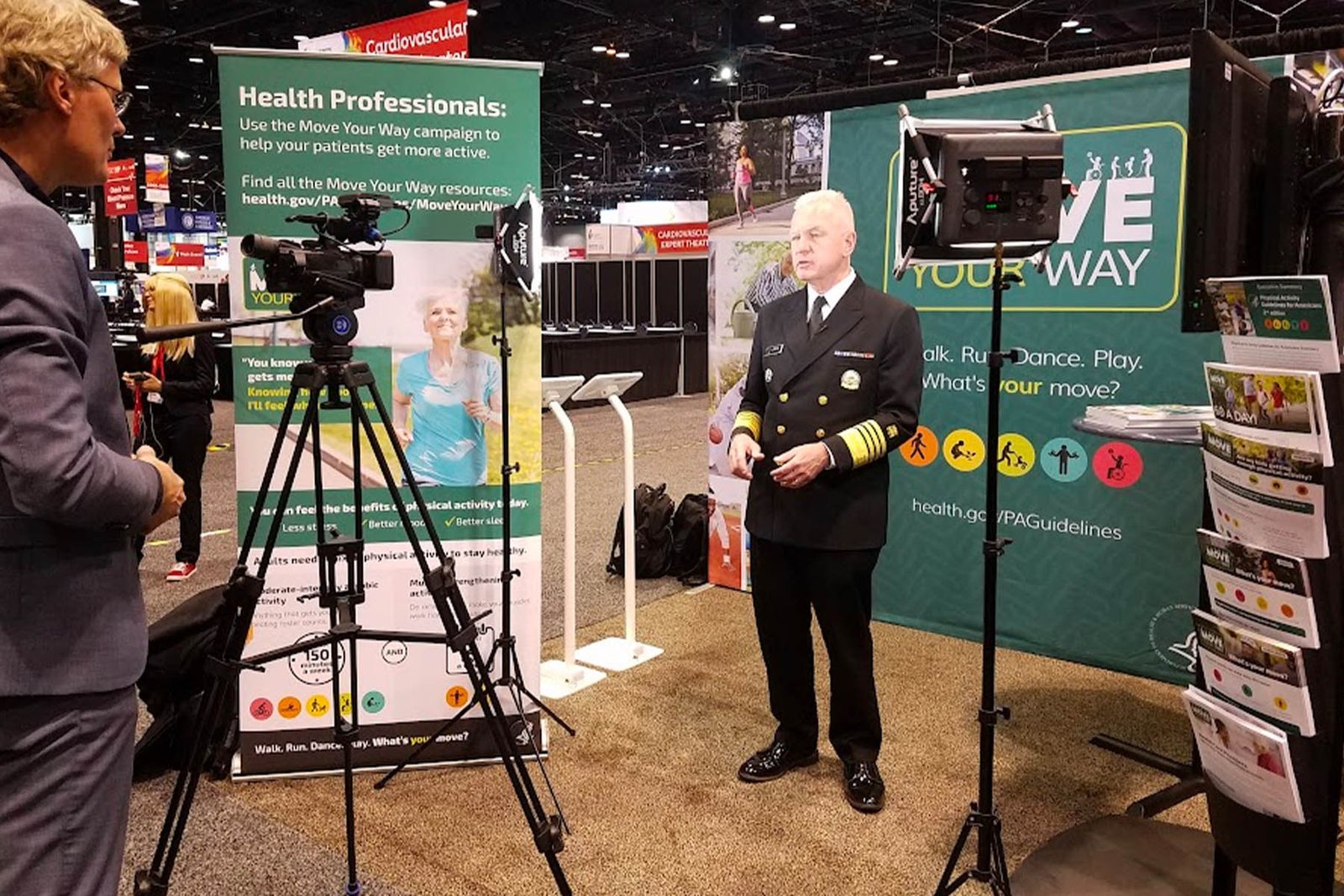
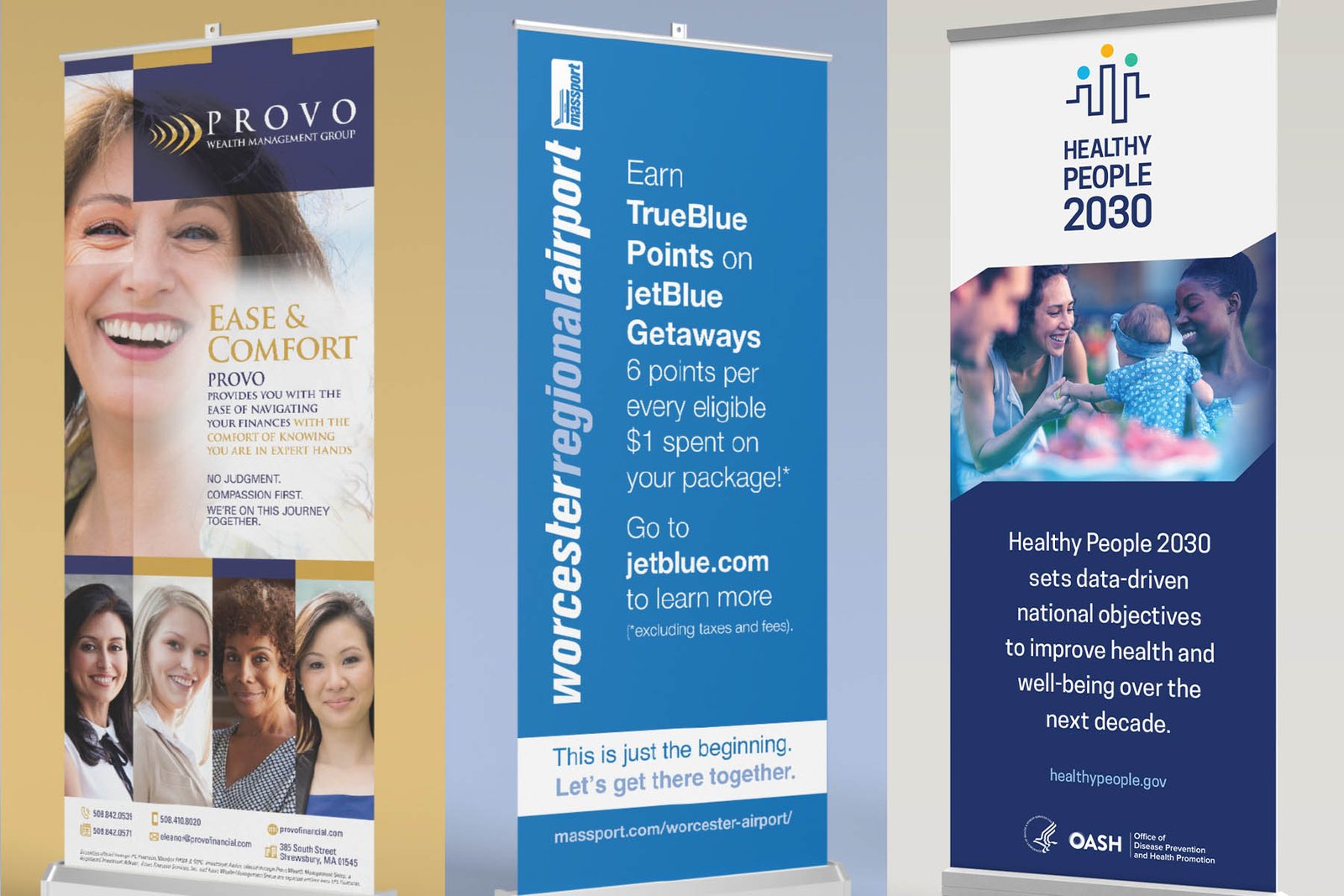
Large-format work changes the way people encounter information. A brochure sits in someone’s hands. A website is directly in front of them. A banner or trade-show booth may first appear from twenty feet away, through a crowd, while the person seeing it is already heading somewhere else.
That changes the hierarchy before I have designed anything.
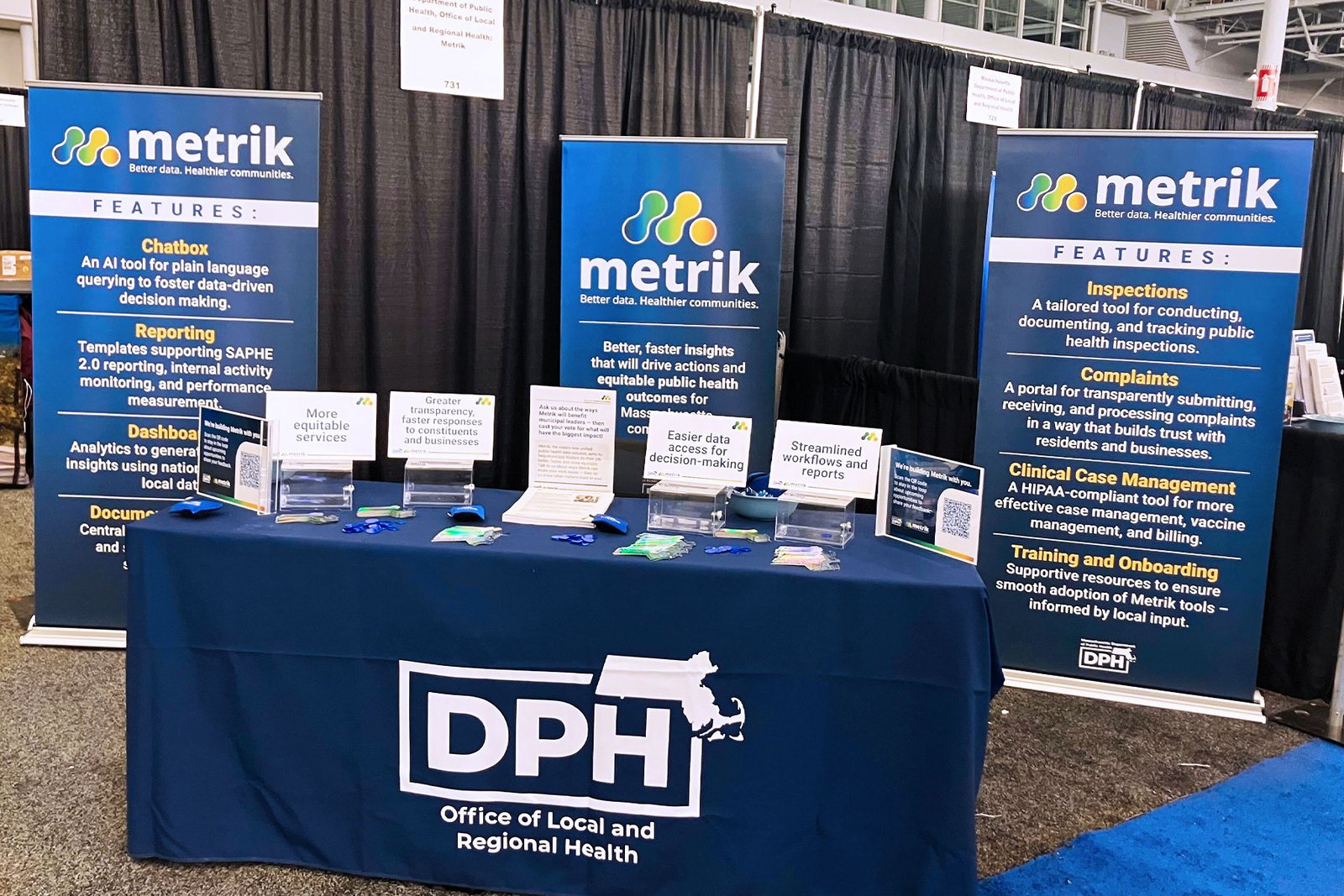
The examples range from public-health pull-ups with real informational demands to commercial trade-show environments where the first job is simply getting someone to look in your direction.
01 / My Process
My Process
Start with the environment
A conference aisle, clinic lobby, event entrance, and exhibition floor each create different viewing conditions. I want to understand the space before deciding how much the piece can reasonably say.
Establish the distance read
Something needs to work before the viewer comes closer. It might be a headline, an image, or strong enough branding that the organization is recognizable across the room.
Let information reveal itself gradually
A pull-up beside a presenter can support more detail because people eventually stand close to it. A booth backdrop usually needs considerably more restraint. I build the hierarchy around those viewing distances.
Think across the footprint
For exhibit work, the backdrop, counter, signage, and supporting graphics need to work as one environment. Designing them independently and adding the same logo to each is not the same thing.
Account for the physical object
Hardware, seams, folds, trim, lighting, and sightlines all have a way of disrupting a perfect flat layout. They belong in the design process from the start.
02 / Why It Matters
Why It Matters
Large-format work begins communicating before anyone has decided to engage with it. If the distance view is doing its job, the next layer has a chance to start a conversation.